An exploration of vineyards, wineries, and people in the Gavi region
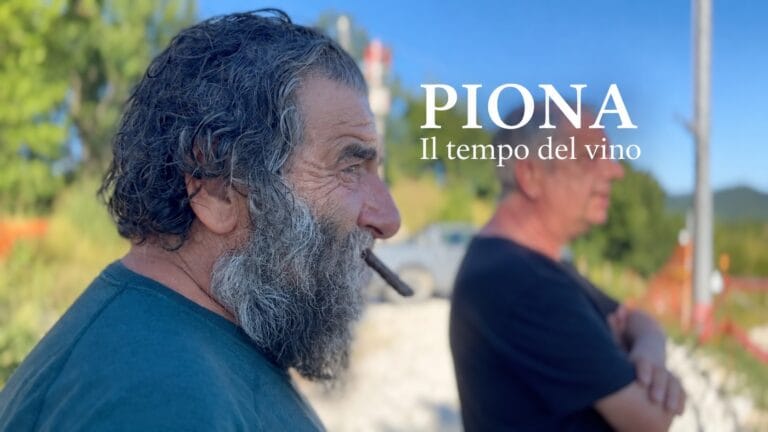
Having finished my documentary Piona – The Time of Wine, I already had my next adventure in mind: telling the story of the grape harvest 2026.
Living among the hills of Gavi, between Gavi and Serravalle Scrivia, vineyards are part of my everyday landscape. And the harvest is perhaps the time of year when this region truly comes alive, when the landscape seems to shift into a different rhythm.
Among the vines, voices, gestures, hard work, and laughter intertwine. Harvesting tubs and crates fill with grapes, tractors move between the rows, and a new chapter in the story of wine begins inside the wineries.
This year, I had the opportunity to follow several stages of the grape harvest in the Gavi region, exploring three different wineries: Villa Pallavicini, Piona, and Villa Sparina.
The summer had been particularly hot, the grapes ripened early, and consequently, the harvest began ahead of schedule.
A Grape Picker Under the Influence of Caffeine
I was already preparing to head out with my camera when Alessandro Pallavicini, Ale, asked whether I would like to join them in harvesting the red grapes.
I thought: why not?
After all, what better way to tell a story than to experience it firsthand?
The day began with an ordinary cup of coffee.
It may sound like an insignificant detail, but for me it certainly isn’t. I usually avoid caffeine because it has devastating effects on me: I could practically pull a train with my teeth, metaphorically speaking, and then spend the entire night wide awake.
So, under the influence of that notorious cup of coffee, I found myself picking red grapes in the vineyards, working like a runaway train.
It was incredibly hot, although, all things considered, it was also quite fun.
At lunchtime, we all gathered around the table, thanks in part to Paolo, my partner, who had come to cook for us grape pickers.
Then, at around three thirty in the afternoon, I felt my energy suddenly drop.
And all at once, I began to feel everything: the heat, the sun, the exhaustion. My head was spinning, I felt nauseous, and I could barely keep my balance.
At that point, I sat down in the shade and told Ale, “I’m going home.”
The work originally scheduled to take two days had, however, been completed in just one. So I certainly didn’t consider it a failure!
Over the following days, though, my body wanted nothing more to do with the grape harvest. And consequently, neither did I want anything to do with the documentary.
Instead, I preferred to escape to Val Borbera, swimming in the cool, crystal-clear pools nestled between the rocky walls of the canyon.
I needed to recharge.
Hunting for Grape Pickers
Once I had recovered my energy, inspiration returned as well.
I went back to Villa Pallavicini, where the white grape harvest had begun in the meantime. This time, however, there would be no pruning shears or crates for me: I was there to film.
I followed the work among the vines, the tractors, the conversations, and those small, spontaneous moments that make every harvest different.
Speaking to me from his tractor, Alessandro described how this particular vintage was progressing, while Luis shared his experience as a grape picker.
Harvesting grapes is demanding work, but it is also a time of togetherness, when experience, cooperation, and small everyday gestures become part of a collective story.
Then I began quite literally hunting for grape pickers across the hills.
A little like those storm chasers who travel across the United States pursuing tornadoes, I drove through the hills of Gavi searching for harvesting teams at work among the vines.
At first, I was looking for the grape pickers working at La Bollina, but instead I came across those of Villa Sparina.
And that is how Villa Sparina became part of the documentary, almost by chance.
There I met Zoran, the harvest supervisor, who told me how the picking was progressing, and Annamaria, who shared her personal experience as a grape picker.
At Villa Sparina, I reached the grape press just as they were unloading the grapes. A fortunate coincidence that allowed me to follow the transition from harvesting to processing.
At Piona, I was also able to film the pressing operations and meet Marco, who told me about his experience of the 2026 harvest.
The accounts of Alessandro, Zoran, Marco, and later Paolo, the cellar manager at Villa Sparina, revealed a common theme: the particularly hot and dry summer had resulted in a smaller harvest, but grapes of excellent quality.
Where the Past Meets the Present
The story continues at Villa Sparina, where I met Paolo, the cellar manager, who kindly offered to guide me through the winemaking process.
The presses, tanks, yeasts, fermenting grape must, and the work of the cellar staff reveal a world that often remains invisible to those who know only the finished product.
But the most fascinating discovery was still to come.
Paolo took me into the historic cellar, dating back to the late eighteenth century.
And there, I must admit, my eyes kept saying: Wow!
Among stone vaults, columns, barrels, and ancient winemaking equipment, the past still seems to be in conversation with the present.
The old wine press and underground vats tell the story of a time when local farmers brought their grapes here to turn them into wine.
I found this transition particularly fascinating: from the technology of a contemporary winery to the memory of a place that still preserves traces of generations of work.
A world where history is not merely preserved, but continues to coexist with modern production.
A Documentary Without a Script
I didn’t follow a predetermined script. I didn’t arrange interviews or plan encounters. I allowed the places, people, and events themselves to suggest the direction of the story.
Many of the situations I filmed arose from fortunate coincidences: arriving at the press just as the grapes were being unloaded, meeting Zoran among the vineyards, or finding Paolo available to guide me through the winery.
During filming, I met different people, each with their own story and their own way of experiencing the harvest.
Some work in the vineyards, others drive tractors, while others oversee the winemaking process. It was precisely these encounters that brought the documentary to life.
When I began editing, I found myself facing an enormous puzzle. I had collected images, conversations, gestures, and atmospheres, but I still didn’t know what shape the final story would take.
It is a process that closely resembles the way I paint.
Even on canvas, I don’t necessarily begin with a clearly defined image. I follow an intuition, allow forms to emerge, observe the relationships that develop, and intervene as the work gradually comes to life.
Something similar happened with this documentary. The story emerged little by little during editing, through the selection of images, voices, silences, and music.
When Massimo Moccagatta watched the film and spontaneously remarked, “You can tell it’s authentic, not staged,” I was particularly pleased.
Because that was exactly what I wanted: not to portray an idealized grape harvest, but to tell the story of the one I had actually encountered, with all its spontaneity and humanity.
A New Language That Continues to Evolve
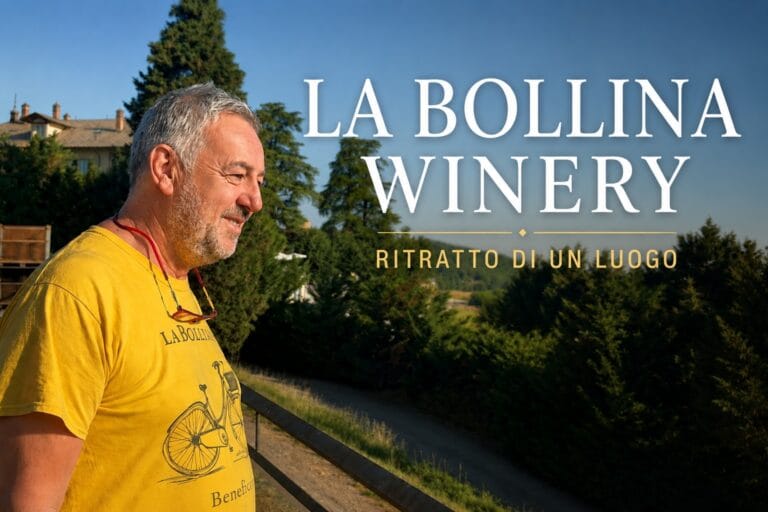
As I already explained when writing about my first documentary, La Bollina Winery – Portrait of a Place, documentary filmmaking represents a new form of expression for me.
A natural evolution of my podcast Storie e Personaggi (Stories and People), through which I had already begun exploring the pleasure of telling stories about people, experiences, and places.
With this third documentary, I realize that my visual language is also evolving from a technical perspective.
I made my first film using only an iPhone and iMovie.
With Piona – The Time of Wine, I moved on to Final Cut Pro, which allowed me to explore and refine the editing process.
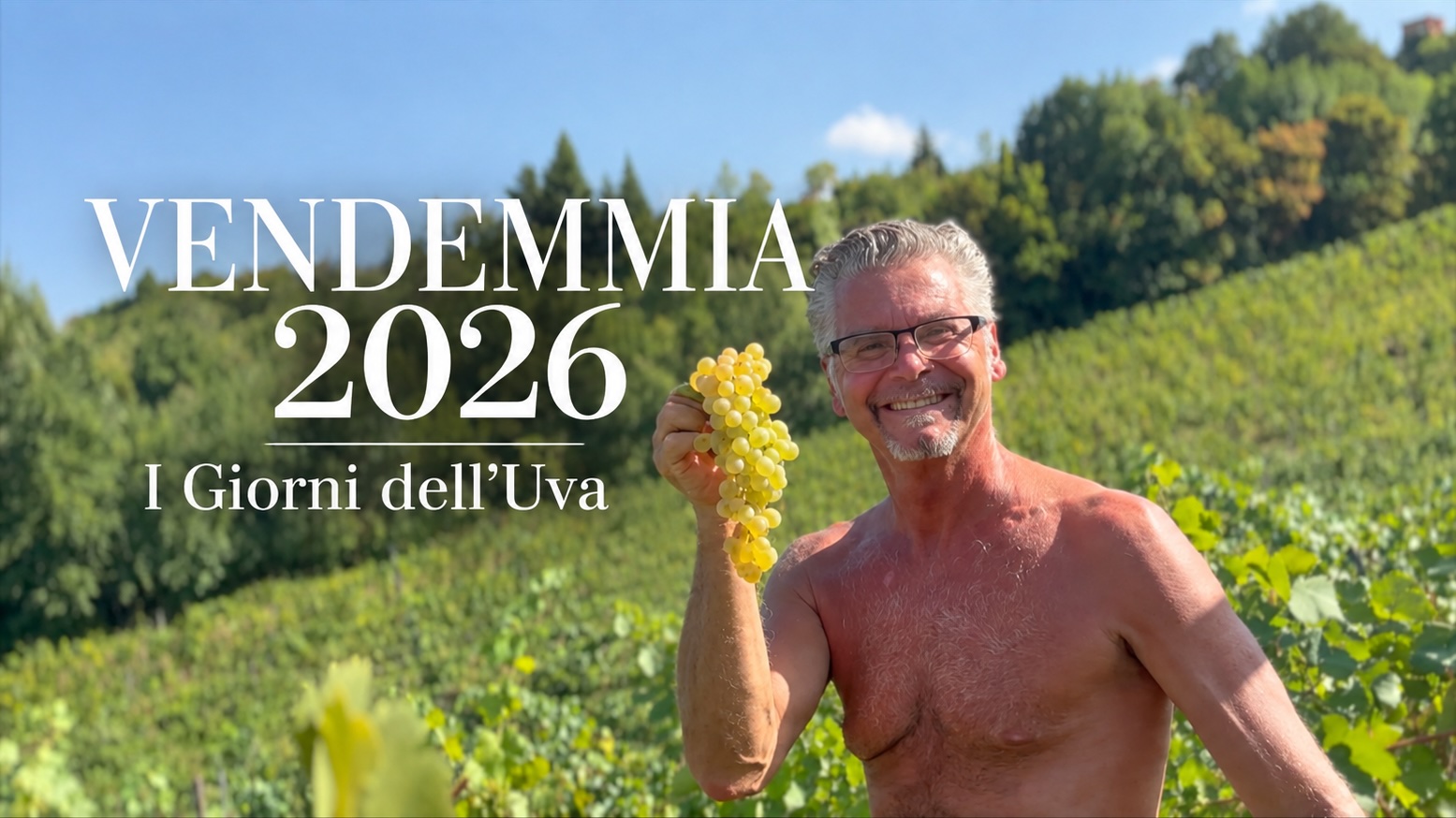
For Vendemmia 2026 – The Days of the Grapes, I also introduced external microphones, improving the recording of voices, and a gimbal to achieve steadier footage and smoother camera movements.
Of course, there is always something new to learn.
The gimbal, for example, still has many functions that I am gradually discovering through use, experimentation, and, naturally, making mistakes.
But technical difficulties do not diminish my need to express myself.
It is the same impulse that accompanies me in painting: a fundamental need to create, explore, and give form to what I feel and observe.
And it is precisely from this need that passion is born.
The Grape Harvest Is Also About Togetherness
The documentary concludes at Piona, with a dinner among friends.
After making Piona – The Time of Wine, my relationship with the people I met during filming continued, developing into a wonderful friendship.
I liked the idea of ending this new story right there, gathered around a table.
Because the grape harvest is not just about work.
It is about cooperation, sharing, hard work, laughter, and encounters. It is a moment when many people contribute to something that goes beyond their individual efforts.
It is a collective experience. It is the joy of being together.
And perhaps, more than anything else, this is the essence I wanted to capture in The Days of the Grapes.
Watch the Documentary
Vendemmia 2026 – The Days of the Grapes
A documentary by Ilaria Berenice
Filming, directing, and editing: Ilaria Berenice